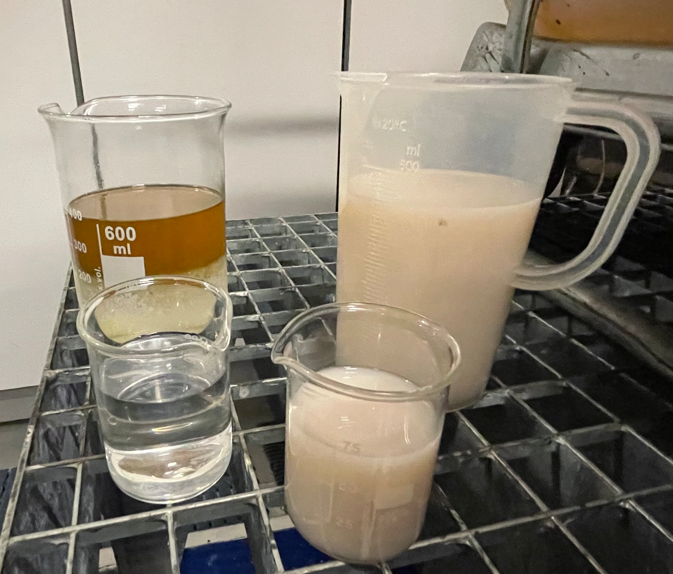

Ultrafiltration of Aluminium Die-Casting Wastewater
May 5, 2026
Successful replacement of an old evaporator system with a modern system
May 6, 2026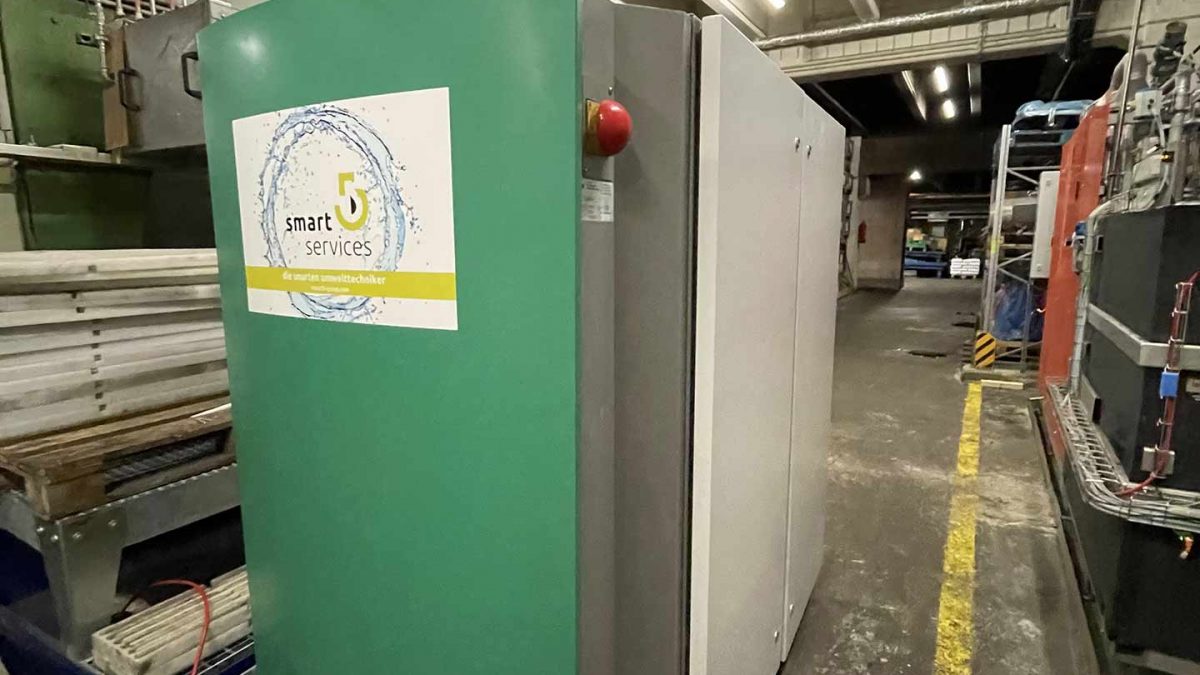
Industrial wastewater treatment plants are no longer just a “secondary process”. They are a critical part of production. They secure permits, protect water bodies, prevent production downtime and directly influence the cost per cubic metre of wastewater. At the same time, requirements from authorities, energy prices, skills shortages and stricter environmental regulations are continuously increasing.
Many companies are therefore facing one central question:
Should plant operation be handled internally — or outsourced to specialised service providers?
The professional operation of wastewater treatment plants under an outsourcing model is becoming increasingly important, particularly in sectors such as automotive, metal processing, surface technology and medical technology. The aim is to minimise risks, reduce costs and at the same time ensure compliance with the state of the art.
smart5 sees itself as a technology- and manufacturer-independent specialist for industrial wastewater treatment. As a “wastewater tuner”, the focus is on measurable improvements in economic efficiency, energy efficiency and operational reliability. The mission: to reduce environmental impact while strengthening the competitiveness of industry.
Why Internal Plant Operation Often Reaches Its Limits
In many plants, wastewater technology has historically been “carried along” as part of operations. Responsibility lies with production, maintenance or environmental management — but rarely with specialised operators. This leads to typical problem areas:
- Lack of personnel capacity or specialist expertise
- High operating costs due to inefficient operation
- Uncertainty regarding operator obligations, such as WHG, BImSchG and hazardous substances legislation
- Insufficient documentation for authority inspections
- Outdated control technology or components
- Unclear responsibilities in the event of malfunctions
Operator responsibility is particularly critical. The operator is liable for compliance with discharge limits, safe plant operation, and environmental and occupational safety. Violations can not only result in fines, but in extreme cases may also lead to production downtime.
In addition, companies are obliged to apply BAT — Best Available Techniques. They must regularly check whether their systems still comply with the current state of the art. Without specialist knowledge, this assessment is difficult.
Professional operator concepts take over precisely these tasks in full — technically, organisationally and legally. The goal is not only stable operation, but continuous improvement.
Industrial Practice: “We Take Care of Everything That Is Required”
Since 2020, smart5 has been operating complex wastewater and process technology systems at several plants on behalf of an industrial customer — with the clear mandate to “do everything that is required”. This includes, among other things:
- Ultrafiltration and microfiltration
- Evaporator systems
- Chemical-physical processes
- Ion exchange and softening systems
- Electroplating wastewater
- Paint pre-treatment processes
The approach is deliberately holistic. It is not only the system itself that is operated, but the entire surrounding environment.
Operation & Optimisation
- Ensuring stable process control
- Minimising energy and operating material costs
- Optimising chemical usage
- Reducing downtime
Maintenance & Modernisation
- Professional repairs
- Establishing sensible spare parts inventories
- Gradual replacement of uneconomical components
- Modernisation of PLC and control technology
Disposal & Material Flow Management
- Handling of concentrates and residues
- Selection of economical disposal routes
- Cost control for waste streams
Authorities and Compliance Issues
- Support during authority inspections
- Assistance with WHG inspections and leak-tightness tests
- Risk analyses and occupational safety topics
- Documentation and verification
This model is often referred to as an “all-round service” or, jokingly, as a “worry-free package”. In reality, however, it is a highly structured operator concept with clearly defined responsibilities.
Advanced Strategies: How Professional Operators Permanently Reduce Costs
The greatest benefit of external plant operation lies not only in relieving the organisation, but also in measurable economic effects.
Practical projects regularly show savings in several areas:
- Operating materials costs
- Energy costs
- Maintenance costs
- Spare parts costs
- Disposal costs
According to practical data, optimisation measures alone can often achieve savings of more than 15–20% — without replacing the plant.
Further levers include:
- Load-Dependent Plant Operation
Adjustment to actual production volumes instead of continuous operation. - Use of Existing Energy Sources
For example, using process waste heat for evaporation or pre-treatment. - Standardisation of Operating Materials
Optimised container sizes, supplier structures and warehousing. - Continuous Technical Improvement
Step-by-step modernisation instead of costly complete investment. - Subsidies for Efficiency Measures
CO₂ and energy programmes can significantly reduce investments.
Many companies underestimate the savings potential of their existing plants. The managing director of an automotive supplier summed it up after an optimisation project:
“I would never have thought how much cost-saving potential there was in my wastewater treatment plant.”
Conclusion: Operator Expertise Is Becoming a Strategic Success Factor
The operation of wastewater treatment plants is evolving from a mandatory technical task into a strategic issue. Increasing requirements, skills shortages and cost pressure make specialised operator solutions attractive for many companies.
Outsourcing does not mean losing control — quite the opposite:
It creates transparency, planning reliability and measurable results.
External support is particularly useful when:
- The plant causes high costs
- Modernisation is required
- Internal resources are lacking
- Regulatory requirements are increasing
- Production reliability is critical
Important: Optimisation does not necessarily mean replacing the plant. In many cases, carefully planned, step-by-step modernisation delivers the best cost-benefit ratio.
If you would like to check whether your wastewater technology is being operated economically, safely and with future viability, an independent assessment by specialists is worthwhile.